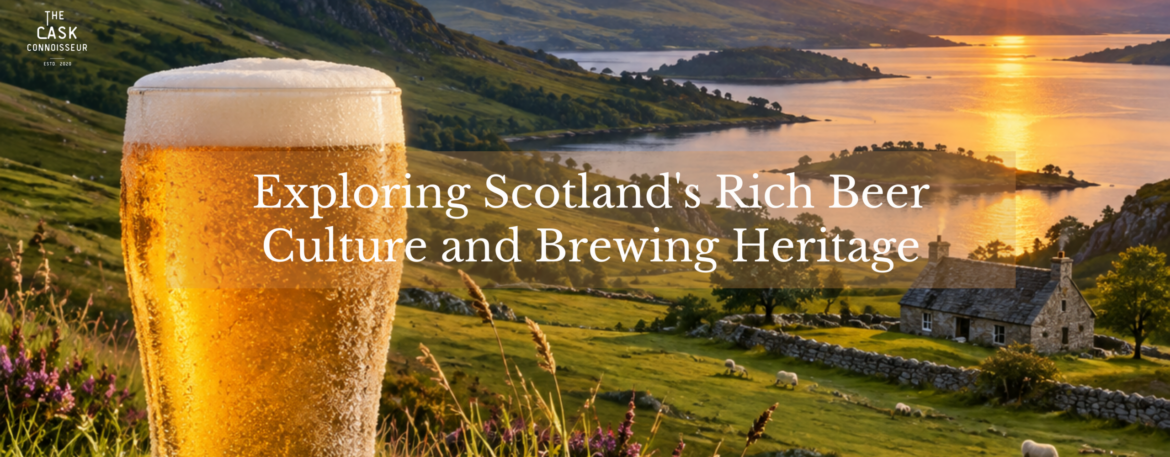
Many places across the world hold Scotland and its whisky culture in high regard, but beer has been brewed in Scotland for even longer. The country has a rich history, traditional styles, and more and more breweries producing everything from classic ales to small-batch releases.
Keen to get a better understanding of Scotland’s beer culture? Let’s have a look at why it’s so special.
A Long Brewing History
Traces of fermented grain drinks have been found at Neolithic sites in Orkney; brewing in Scotland goes back many centuries. Ale was once an everyday drink that was made at home, on farms, and even in monasteries.
Commercial brewing began to really take off in the 18th and 19th centuries. Thanks to good water and local barley, Edinburgh and Alloa became key brewing towns because they had both in abundance, along with demand from an ever-growing industrial workforce.
Edinburgh alone had dozens of breweries at its peak, and Scottish ale was shipped across the British Empire.
In the 20th century, many of those breweries closed or were absorbed into larger groups. A few historic names survived, including Belhaven in Dunbar, founded in 1719 and often described as Scotland’s oldest working brewery.
Traditional Scottish Beer Styles
Scottish ales are built around malt rather than hops. Hops grow poorly in Scotland’s climate and had to be imported, so brewers took their flavour from barley instead. The result is beer that is usually darker, smoother and a little sweeter than English bitter.
Traditional Scottish ales are usually sorted by strength, from lighter session ales that are easy to drink over an evening to strong, full-bodied ales that often eclipse 7% ABV.
Scotland also has a tradition of brewing with plants instead of hops. Heather ale is the best-known example, and some modern brewers have revived herbal beers made with bog myrtle and other local botanicals.
Lager and Glasgow
Scotland adopted lager faster than most of the UK. It has been brewed by Tennent’s at Wellpark Brewery in Glasgow since 1885, on a site where beer had already been made for centuries. Tennent’s is the leading Scottish beer brand, and for good reason.
Through the 20th century, lager became the standard pub order for many Scottish drinkers, while traditional ales held on in specialist bars.
The Modern Brewing Scene
The number of Scottish breweries has grown sharply since the late 2000s. Most are small independents serving their local area, but several now sell across the UK and abroad.
Williams Bros in Alloa brought heather ale back with Fraoch. Harviestoun in Clackmannanshire makes Schiehallion lager and Ola Dubh, a stout aged in whisky casks. Fyne Ales runs a farm brewery in Argyll known for its pale ale Jarl. BrewDog, founded in Aberdeenshire in 2007, did much to bring craft beer into the mainstream, and Innis & Gunn in Edinburgh made its name with oak-aged beers.
Whisky is a common thread. Plenty of breweries age beer in former whisky casks for added vanilla and oak, and many use Scottish ingredients.
How to Explore Scottish Beer
One of the popular, effective ways of understanding Scottish beer is by tasting a few different styles, side by side. For example, go for a traditional ale, a modern IPA, and a stout; this can help you see just how wide the range is.
Brewery tours are a good next step, since they explain how the beer is made and usually finish with a tasting. In Glasgow, the Tennent’s Tour and Beer Masterclass pairs a tour of Wellpark with a guided tasting, and suits beginners as well as people who already know their styles.
Specialist pubs in Edinburgh, Glasgow and Aberdeen often carry cask ales and guest beers from smaller Scottish breweries, and festivals run by local CAMRA branches bring dozens of producers together. When ordering, check the ABV on traditional ales to gauge strength, and ask about seasonal or cask-aged releases from nearby breweries.
Whether you prefer a classic lager, a strong Scotch ale or a new release from a local brewery, Scottish beer has plenty to try.


